Share this now - someone’s life could change.


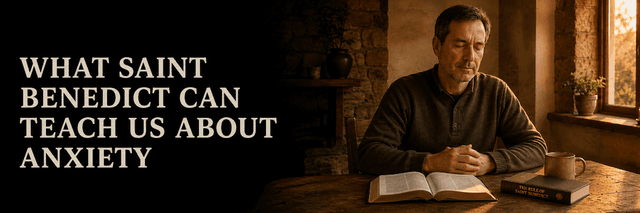
What Saint Benedict Can Teach Us About Anxiety
Saint Benedict lived more than 1,500 years ago, but he understood the restlessness of the human heart. He knew that people could become distracted, fearful, overwhelmed, discouraged, and controlled by thoughts about the future. The Rule of Saint Benedict does not use modern mental health language, but it offers a practical way of life that can help us respond to anxiety with prayer, structure, community, humility, and trust.
Anxiety Pulls Us Away From the Present
Anxiety often carries the mind into a future that has not happened. We imagine possible failures, losses, conflicts, and disasters. Even when we are physically safe, our thoughts may continue preparing for danger. Benedictine life repeatedly brings a person back to the present moment. There is a time to pray, a time to work, a time to eat, a time to listen, and a time to rest. Instead of attempting to solve the entire future, we are invited to receive the responsibility God has placed before us today.
Create a Steady Daily Rhythm
Uncertainty can make anxiety feel stronger. The Benedictine schedule gives each day a reliable pattern. Monks do not decide every morning whether they feel like praying, working, or gathering with the community. The rhythm has already been established. A simple home routine can provide similar stability. Choose regular times to wake, pray, eat, work, exercise, rest, and sleep. Your schedule does not need to be rigid, but it should protect the practices that help you remain grounded. When your thoughts feel scattered, return to the next faithful action.
Begin the Morning With God
Many people begin the day by checking messages, headlines, finances, or social media. Before getting out of bed, the mind may already be processing problems and comparisons. Saint Benedict teaches us to begin with prayer. Before reaching for your phone, take a slow breath and remember that the day belongs to God. Read a Psalm, express gratitude, and ask for the grace needed for today. You do not need strength for every possible future. You need grace for the day you have been given.
Return to Prayer Throughout the Day
Benedictine monks pause several times each day for prayer. These pauses interrupt work and remind the community that no problem is larger than God.
You can create brief prayer pauses at morning, lunch, and evening. Stop what you are doing, breathe slowly, and repeat a simple prayer such as, “Jesus, I trust in You,” or, “Lord, give me peace for this moment.” Regular prayer does not always remove anxious feelings immediately, but it prevents fear from becoming the only voice you hear.
Use the Psalms When You Cannot Find Words
The Psalms express fear, grief, confusion, anger, hope, gratitude, and trust. Benedictine monks pray them repeatedly because they teach us to bring every human emotion before God. When anxiety makes prayer difficult, read a Psalm slowly. You do not have to pretend that everything is fine. Tell God what frightens you and allow the words of Scripture to carry what you cannot express. Honest prayer is more helpful than forced calm.
Focus on the Work in Front of You
Anxiety can make us feel that everything must be solved at once. The Benedictine value of work offers another approach. Complete the task that belongs to the present moment. Wash the dishes, answer one email, take a walk, prepare the meal, make the necessary call, or finish one section of the project. Small actions restore a sense of order. Ordinary work can also become a prayer when it is completed carefully and offered to God.
Practice Silence Without Isolation
Constant noise can distract us temporarily, but it rarely brings lasting peace. Saint Benedict valued silence because it creates space to listen to God and recognize what is happening within us. Begin with a short period of silence rather than forcing yourself into a long one. Sit somewhere peaceful, breathe naturally, and allow your thoughts to settle. If silence makes your anxiety feel significantly worse, do not isolate yourself. Speak with someone you trust and seek appropriate support.
Limit the Noise Entering Your Mind
News, social media, arguments, and endless notifications can keep the mind in a state of alarm. Benedictine moderation teaches us to be intentional about what we consume. Choose specific times to check news and messages. Turn off unnecessary alerts. Avoid filling the final moments before sleep with upsetting information. Staying informed can be responsible, but repeatedly consuming the same frightening material rarely makes us more prepared.
Listen Instead of Assuming
Anxiety can lead us to imagine what other people think, what they meant, or what they might do. Saint Benedict begins his Rule with the command to listen.
Instead of building a story from incomplete information, ask a question. Listen carefully to the answer. Many fears grow in the absence of clear communication. Honest conversation can replace imagined rejection or conflict with understanding.
Accept That You Cannot Control Everything
The desire to control every outcome often feeds anxiety. Benedictine humility reminds us that we are human, limited, and dependent upon God and other people. Humility does not mean giving up responsibility. It means doing what we reasonably can and releasing what belongs to God. Prepare carefully, make wise decisions, and seek help when needed. Then acknowledge that no amount of worry can guarantee the outcome you want.
Stay Connected to Other People
Benedict did not design spiritual life as a completely private journey. Monks live in community, pray together, work together, and support one another through weakness. Anxiety often encourages withdrawal, but isolation can make fearful thoughts grow stronger. Speak honestly with someone you trust. Share a meal, attend Mass, call a friend, or spend time with family. You do not have to explain everything perfectly. Sometimes the presence of another person is enough to remind you that you are not alone.
Welcome Rest Without Guilt
An anxious person may stop working physically while remaining mentally busy. The body is sitting, but the mind continues reviewing mistakes and anticipating problems. Benedictine life makes room for sleep and appropriate rest because human limitations are not failures. Create a gentle evening routine, reduce screen use, pray, and allow the day to end. Some concerns must remain unfinished until tomorrow.
Review the Day With Mercy
At night, it is easy to replay everything that went wrong. A Benedictine examination of the day should not become an exercise in self-criticism.
Give thanks for moments of grace. Recognize where fear influenced your actions. Ask forgiveness where needed, and consider one reasonable step for tomorrow. Then place the entire day into God’s hands. Reflection should lead to freedom, not endless rumination.
Take One Faithful Step at a Time
Saint Benedict did not expect immediate perfection. His Rule was written for people growing gradually through repeated practice. This is encouraging when anxiety makes progress feel slow. You may not be able to control every anxious thought, but you can choose your next action. Pray for five minutes. Step outside. Complete one task. Call someone. Eat a nourishing meal. Turn off the news. Go to bed at a reasonable time. Small faithful steps can gradually create a more peaceful life.
Faith and Professional Support Can Work Together
Prayer and Benedictine practices can provide meaningful spiritual support, but persistent or severe anxiety may require help from a qualified mental health professional or physician. Seeking treatment is not a failure of faith. God can work through counselors, doctors, supportive relationships, healthy routines, and the sacraments.
Experience Benedictine Peace at Home
SmartGuy.com’s free How to Live Like a Monk at Home program includes 21 guided 30-minute sessions over seven days, with a morning, lunch, and evening session each day. The program helps you step away from noise and practice prayer, silence, humility, attentive work, gratitude, reflection, and rest within your normal life.
Saint Benedict does not promise a life without fear, uncertainty, or hardship. He offers a way to remain rooted when those things arrive. Begin with God, follow a healthy rhythm, focus on the present task, limit unnecessary noise, stay connected to others, accept your limitations, and end each day in trust. Peace often grows not when every problem disappears, but when we learn that we do not face those problems alone.
see also:
Sign in to share your thoughts