Share this now - someone’s life could change.


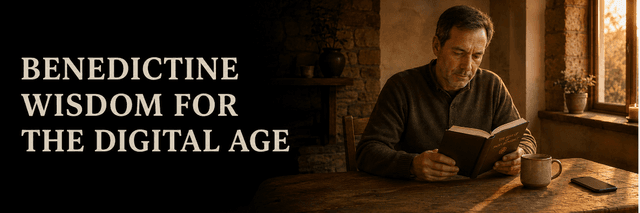
Benedictine Wisdom for the Digital Age
Saint Benedict lived more than 1,500 years before smartphones, social media, streaming video, and constant notifications. Yet the Rule of Saint Benedict offers a remarkably effective response to the problems created by digital life. Benedict understood distraction, restlessness, careless speech, comparison, pride, excess, and the difficulty of paying attention. His answer was not to escape the world but to build a disciplined life centered on God.
Technology Is a Tool, Not a Master
Technology can connect families, spread knowledge, support businesses, share faith, and bring help to people across the world. The problem begins when a useful tool starts controlling our time, attention, emotions, and relationships.
Benedictine wisdom asks a simple question: Is this helping me seek what is good, or is it pulling me away from it? Technology should serve our purpose rather than determine it.
Begin the Day Without Your Phone
Benedictine monks begin their day with prayer. Many modern people begin theirs by reaching for a phone. Within seconds, the mind is filled with messages, headlines, opinions, problems, and the lives of other people. Try keeping your phone away from your bed and giving the first few minutes of the morning to God. Read a Psalm, offer the day in prayer, and sit briefly in silence. Allow your first thoughts to come from faith rather than a screen.
Listen With the Ear of the Heart
The Rule begins with the word “Listen.” Digital culture often encourages the opposite. We scroll quickly, react instantly, interrupt one another, and decide what we think before understanding what was said. Benedictine listening is slow and attentive. It means giving another person your full presence, reading carefully, asking questions, and pausing before responding. This practice can improve online conversations as well as face-to-face relationships.
Create Digital Silence
A monastery uses silence to protect prayer, reflection, and community. Your home can benefit from digital silence too. Choose periods when televisions, computers, and phones are turned off or placed out of reach. Begin with ten or fifteen minutes and gradually extend the time. You might create a phone-free meal, a quiet hour before bed, or a screen-free Sunday afternoon. Silence may initially feel uncomfortable, but it allows your mind to recover from constant stimulation.
Stop Treating Every Notification as Urgent
Benedictine monks respond to a bell that calls the community to prayer, work, or meals. Modern people respond to dozens of digital alerts that often have no real importance. Every sound and vibration trains the mind to abandon the present moment. Turn off notifications that do not require immediate attention. Choose specific times to check email, messages, and social media instead of responding throughout the day. Your attention is valuable, and you should decide where it goes.
Do One Thing at a Time
Saint Benedict organized the day so that each activity had its proper place. Monks prayed when it was time to pray, worked when it was time to work, and rested when it was time to rest. Digital technology encourages us to do many things at once, but divided attention often produces shallow work and mental exhaustion. Close unnecessary tabs, silence your phone, and focus on one task. When you speak with someone, put the device away and give the person your attention.
Practice Digital Humility
Social media can tempt us to build an image, seek praise, compare ourselves with others, or measure our worth through attention. Benedictine humility offers another standard. We do not need to prove our importance or place ourselves at the center of every conversation. Before posting, ask why you want to share it. Is it helpful, honest, and encouraging, or are you searching for validation? You do not need to display every accomplishment, opinion, meal, trip, or private moment. Some parts of life become more meaningful when they are protected.
Speak Carefully Online
Saint Benedict warned about excessive and harmful speech. That lesson matters even more online, where words can travel instantly and remain visible for years. Gossip, insults, anger, and rumors can damage real people even when they are delivered through a screen. Before commenting or sharing, pause. Ask whether the information is true, necessary, and charitable. Disagreement does not require cruelty. If you would not say something to a person’s face, it may not belong online.
Reject Endless Comparison
Online platforms often show carefully selected moments from other people’s lives. Their success, appearance, relationships, homes, and experiences can make our own lives feel inadequate. Comparison creates restlessness because someone will always appear to have more. The Benedictine promise of stability teaches us to become present to the life we have been given. Instead of constantly looking at what others possess, care for your home, relationships, work, and community. Gratitude grows when attention returns to what is directly in front of you.
Choose What Enters Your Mind
A monastery carefully selects what is read, heard, and discussed because these things shape the community. We should be equally attentive to the material entering our minds through screens. Review the accounts, videos, programs, websites, and news sources you consume. Notice how you feel afterward. Some content informs and inspires, while other content creates anger, fear, envy, lust, or hopelessness. Removing harmful material is not weakness. It is wise stewardship of your mind and heart.
Restore Sacred Reading
Digital reading often trains us to skim rapidly and jump between ideas. The Benedictine practice of lectio divina teaches us to read Scripture slowly and prayerfully. Choose a short passage, place your phone out of reach, and read the words several times. Notice what speaks to your heart. Reflect, pray, and remain silent. This kind of reading forms us in a way that endless scrolling cannot.
Protect Meals and Relationships
The Rule treats meals as important moments of nourishment and community. A meal loses much of its value when everyone is looking at a different screen.
Create a place where phones are kept during meals. Look at one another, talk about the day, listen to concerns, and share gratitude. The people sitting with you deserve more attention than people posting somewhere else.
Use Technology for Hospitality
Benedictine hospitality teaches that every guest should be welcomed as Christ. Technology can support this calling when used intentionally. Send encouragement to someone who is struggling. Call a person who may be lonely. Share useful information, faith-filled content, or an invitation to gather in person.
Digital communication is most valuable when it leads to greater love, service, and genuine connection.
End the Day in Peace
Many people carry their phones into bed and fill the final moments of the day with news, entertainment, arguments, and comparison. The mind remains active even after the screen is turned off. Set a time when your devices are put away for the night. Review the day with God, express gratitude, ask forgiveness, and release your worries. Give your mind and body permission to rest.
Build a Personal Rule for Technology
Saint Benedict created a rule because good intentions are rarely enough. You can create a simple personal rule for your digital life. Decide when you will check messages, where phones are not allowed, which notifications remain active, what content you will avoid, and when screens will be turned off. Keep the rule realistic. Its purpose is not to punish you but to protect your freedom, relationships, prayer, work, and peace.
Experience Benedictine Life at Home
SmartGuy.com’s free How to Live Like a Monk at Home program offers 21 guided 30-minute sessions over seven days, with a morning, lunch, and evening session each day. The program helps you step away from noise and practice prayer, silence, humility, attentive work, gratitude, reflection, and rest within your ordinary routine.
The digital world competes constantly for your attention because attention has value. Benedictine wisdom reminds us that where we place our attention shapes who we become. Begin with God, protect silence, listen carefully, work with focus, speak thoughtfully, welcome others, and end the day in peace. Technology can remain part of your life without becoming the center of it.
see also:
Sign in to share your thoughts