Share this now - someone’s life could change.


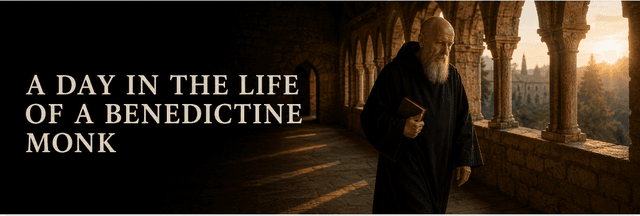
A Day in the Life of a Benedictine Monk
What does a Benedictine monk do all day? Many people imagine monks spending every waking hour in silent prayer, but Benedictine life includes much more. A monk’s day is carefully balanced between prayer, work, reading, meals, community, silence, and rest. The goal is not to escape ordinary life but to make every part of life an opportunity to seek God.
The Rhythm of the Monastery
Benedictine monasteries follow the Rule of Saint Benedict, which creates an organized rhythm for each day. The exact schedule differs between monasteries, but the basic pattern remains the same. Monks gather for prayer at appointed times, work with their hands or minds, study Scripture, eat together, and observe periods of silence. Rather than allowing distractions or emotions to control the day, the schedule keeps bringing the monk’s attention back to God.
Beginning Before Sunrise
A Benedictine monk often rises before sunrise while the monastery is still quiet. The day begins with prayer rather than news, messages, or social media. In the stillness of the early morning, the monks gather in the chapel for the first prayers of the day. Beginning this way reminds them that the new day is a gift and that God comes before every task, concern, or ambition.
Praying the Liturgy of the Hours
The monks gather several times throughout the day to pray the Liturgy of the Hours, also called the Divine Office. These prayers include Psalms, Scripture readings, hymns, and periods of silence. Saint Benedict referred to this communal prayer as the Work of God. It forms the foundation of monastic life and allows the entire day to become a continuing conversation with God.
Listening to the Psalms
The Psalms hold a special place in Benedictine prayer because they express nearly every human emotion. They contain praise, gratitude, sorrow, fear, anger, repentance, hope, and trust. By praying the Psalms repeatedly, monks learn to bring their complete humanity before God. They do not pray only when they feel peaceful or inspired. They remain faithful to prayer through every season of life.
Time for Sacred Reading
A monk’s day usually includes lectio divina, a slow and prayerful way of reading Scripture. The purpose is not to finish as many pages as possible or collect information. A monk reads a short passage carefully, reflects on it, responds to God in prayer, and rests quietly in His presence. This practice allows Scripture to move from the page into the heart and eventually into daily actions.
Work as an Offering
After morning prayer and reading, monks begin their work. Depending on the monastery, they may farm, cook, clean, teach, make bread, care for animals, maintain buildings, create religious goods, welcome guests, manage a retreat center, or complete administrative tasks. Some monasteries produce food, coffee, candles, books, soap, or other goods to support their community.
Making Ordinary Tasks Sacred
Saint Benedict did not separate spiritual life from practical responsibility. A monk can serve God while washing dishes, repairing a roof, tending a garden, or helping a guest. The task itself may appear ordinary, but the attention and love brought to it can make it sacred. Benedictine spirituality teaches that we do not have to wait for a dramatic moment to serve God. We can meet Him in the work directly in front of us.
Meals in Community
Meals are generally simple, nourishing, and shared with the community. In some monasteries, a monk reads aloud while the others eat in silence. This allows the community to receive physical and spiritual nourishment at the same time. Food is treated as a gift rather than entertainment, and meals encourage moderation, gratitude, and fellowship.
The Gift of Silence
Silence is an important part of the Benedictine day, but it does not mean monks never speak. They communicate when necessary, work together, and share appropriate moments of conversation and recreation. Silence protects the monastery from constant noise and careless speech. It allows monks to listen more carefully to God, other people, and their own thoughts.
Hospitality to Every Guest
The Rule of Saint Benedict teaches that every guest should be welcomed as Christ. Some monks may spend part of their day receiving visitors, offering spiritual guidance, preparing guest rooms, leading retreats, or helping people who come to the monastery seeking peace. Benedictine hospitality is not based on a guest’s wealth or status. Each person is to be received with dignity, patience, and kindness.
Living With Other People
Monastic life is not an escape from relationships. A Benedictine monk lives closely with the same community for many years. He must learn to accept different personalities, forgive offenses, listen to others, receive correction, and place the good of the community above his personal preferences. Living together becomes one of the monk’s greatest schools of humility and love.
Returning to Prayer
Work stops at appointed times so the monks can return to the chapel. This repeated movement between prayer and work keeps the day balanced. Problems may remain unfinished, but the bell reminds the monks that no task is more important than God. Prayer renews their perspective before they return to their responsibilities.
Rest and Recreation
Benedictine life also includes rest. Monks may walk, read, exercise, enjoy the outdoors, or spend time in appropriate conversation with one another. Saint Benedict understood that people have physical and emotional limits. Rest is not laziness when it restores the body, clears the mind, and prepares a person to serve again with greater attention.
Ending the Day in Peace
The day concludes with evening prayer, often followed by a period known as the Great Silence. Conversations stop, the monastery becomes still, and each monk prepares for sleep. The final prayers place the community into God’s care. Instead of carrying every worry into the night, the monk is invited to release the day with gratitude and trust.
Is Every Day Peaceful?
Monks experience many of the same struggles as everyone else. They can become tired, distracted, impatient, discouraged, or frustrated with other people. The schedule does not eliminate human weakness. It provides a structure that helps monks return to prayer, responsibility, and community even when they do not feel motivated. Their faithfulness is built through returning again and again.
What We Can Learn From Monks
Most people cannot follow a monastery schedule, but we can adopt its basic wisdom. We can begin the morning with prayer before reaching for our phones. We can pause at midday to remember God. We can complete our work with care, eat with gratitude, create time for silence, welcome others kindly, and end the evening by reviewing the day.
Live Like a Monk at Home
SmartGuy.com’s free How to Live Like a Monk at Home program helps you experience this Benedictine rhythm within your normal routine. It includes 21 guided sessions over seven days, with one session in the morning, one at lunch, and one in the evening. You do not need to leave your family, job, or home. You simply create intentional moments for prayer, silence, reflection, humility, gratitude, and rest.
A Benedictine monk does not measure a successful day by how much attention, money, or recognition he receives. A good day is one in which he listens, prays, works faithfully, serves others, accepts his limitations, and returns to God whenever he becomes distracted. That simple rhythm offers all of us a powerful lesson: peace is not usually found by escaping our responsibilities, but by learning to live them with greater purpose.
see also:
Sign in to share your thoughts