Share this now - someone’s life could change.


What Is the Rule of Saint Benedict? A Guide to a More Peaceful Life
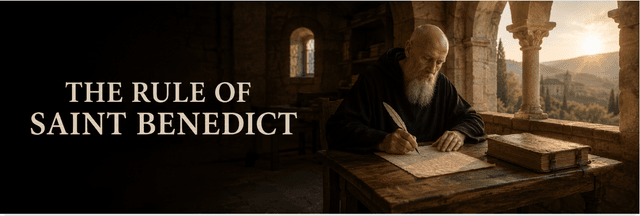
The Rule of Saint Benedict is one of the most influential spiritual guides ever written. Created more than 1,500 years ago for monks living together in a monastery, it offers practical wisdom about prayer, work, humility, leadership, relationships, discipline, rest, and the proper use of possessions. Although most people will never enter a monastery, the Rule can still help anyone build a calmer, more balanced, and more meaningful life.
Who Wrote the Rule of Saint Benedict?
Saint Benedict wrote the Rule during the sixth century after establishing monastic communities in Italy. His most famous monastery was Monte Cassino, where monks lived together under his spiritual leadership. Benedict had seen communities struggle because of pride, disorder, harsh leadership, and a lack of discipline. He created the Rule to help ordinary people seek God together through a balanced daily rhythm.
A Rule That Begins With Listening
The first word of the Rule is “Listen.” This single word captures the heart of Benedictine spirituality. Benedict understood that we cannot grow if we never stop talking, reacting, or distracting ourselves. We must learn to listen to God, Scripture, wise teachers, other people, and the quiet movements within our own hearts. True listening requires humility because it asks us to accept that we may not already have every answer.
A School for Spiritual Growth
Benedict described the monastery as a “school for the Lord’s service.” He did not expect people to arrive spiritually perfect. The monastery was a place where imperfect people learned to become more patient, disciplined, loving, and faithful. This remains one of the Rule’s most encouraging lessons. Spiritual growth is not about appearing perfect. It is about allowing everyday experiences to shape us gradually into better people.
Prayer at the Center of the Day
Prayer provides the foundation for Benedictine life. Monks stop at appointed times throughout the day to pray the Psalms, hear Scripture, and worship together. These regular pauses keep work, worry, and ambition from taking control of the entire day. Benedict teaches us that prayer should not be something we attempt only when we have spare time. Our other activities should be arranged around our relationship with God.
The Sacred Value of Work
Work is also an important part of the Rule. Benedict expected every person to contribute to the community according to his abilities. Work was not simply a way to earn money or complete unpleasant chores. It could become an act of service and prayer. Whether someone was farming, cooking, cleaning, studying, copying manuscripts, or welcoming guests, the work mattered when it was completed with care and offered to God.
Balance Instead of Extremes
One reason the Rule has lasted for centuries is its emphasis on balance. Benedict understood that people need prayer, work, food, sleep, study, silence, fellowship, and rest. He discouraged both laziness and unhealthy extremes. The daily schedule was disciplined but humane. The purpose of the Rule was not to make life miserable. It was to remove unnecessary distractions and create the conditions in which a person could grow closer to God.
The Importance of Humility
Humility is one of the Rule’s central themes. Benedict devoted an entire chapter to twelve steps of humility. He warned that pride can prevent us from listening, learning, admitting mistakes, and serving others. Benedictine humility does not mean believing that we are worthless. It means recognizing that we are not the center of everything. We depend on God, need other people, and always have more room to grow.
Obedience as Attentive Listening
Modern people often react negatively to the word obedience, but Benedict understood it as listening followed by faithful action. The obedient person is willing to set aside selfish preferences for the good of the community. This does not mean accepting cruelty or wrongdoing. It means learning to respond without constant resistance, complaining, or insisting that everything be done our way.
Silence and Careful Speech
The Rule encourages silence because Benedict knew how easily words can become harmful. Gossip, criticism, boasting, arguing, and careless comments can quickly damage a community. Silence creates space for prayer, reflection, and better listening. Benedict did not forbid healthy conversation or laughter, but he encouraged people to speak thoughtfully. Before speaking, we can ask whether our words are true, necessary, helpful, and kind.
Welcoming Every Guest
One of the Rule’s most beautiful teachings is that every guest should be welcomed as Christ. Benedictine hospitality is more than politeness. It asks us to recognize the dignity of each person who enters our lives. Guests, strangers, the poor, the sick, and travelers should be treated with attention and respect. A welcoming home, church, workplace, or community can become a place where people experience the love of God.
Caring for People and Possessions
Benedict taught that the sick should be cared for with special compassion. He also instructed the monastery’s leaders to consider each person’s individual needs. At the same time, the tools and possessions of the monastery were to be treated as carefully as sacred vessels. This teaches us not to use people or waste things. We are called to care for what has been entrusted to us, including our relationships, homes, work, time, health, and material resources.
Leadership With Compassion
The Rule provides extensive advice for the abbot, the leader of the monastery. Benedict expected him to be firm when necessary but also patient, wise, and compassionate. He was told to adapt his guidance to different personalities and never place his own power above the wellbeing of the community. Benedict believed a leader would be accountable to God for how he treated every person placed in his care.
Stability in a Restless World
Benedictine monks make a promise of stability, committing themselves to a particular community. Stability teaches people to stop running whenever life becomes uncomfortable. Modern culture encourages us to replace jobs, relationships, possessions, and commitments whenever something more exciting appears. Benedict reminds us that deep spiritual growth often happens when we remain faithful, work through difficulties, and care for the people already around us.
Living the Rule at Home
You do not need to follow every monastic instruction to benefit from the Rule of Saint Benedict. Begin the day with prayer before checking your phone. Create a consistent daily schedule. Complete ordinary work with attention. Read a short passage of Scripture. Listen before speaking. Welcome others warmly. Eat with gratitude. Care for your possessions. Make time for silence and end the evening by reviewing your day with God.
Try the Benedictine Way for Seven Days
SmartGuy.com’s free How to Live Like a Monk at Home program makes these teachings practical. The program includes 21 guided sessions over seven days, with a morning, lunch, and evening session. Each session helps you practice Benedictine habits such as prayer, silence, humility, gratitude, attentive work, spiritual reflection, and rest within your normal life.
The Rule of Saint Benedict may sound restrictive until we understand its purpose. It does not attempt to control every moment. It creates a healthy rhythm that frees people from distraction, selfishness, disorder, and excess. Its message remains powerful today: listen carefully, pray regularly, work faithfully, live humbly, care for others, and allow ordinary life to lead you closer to God.
see also:
Sign in to share your thoughts