Share this now - someone’s life could change.


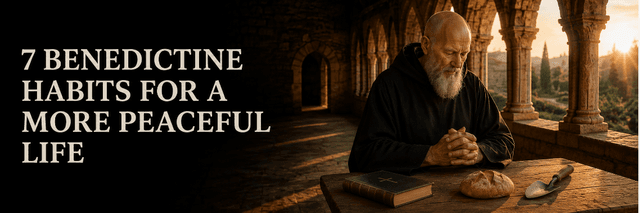
7 Benedictine Habits for a More Peaceful Life
Modern life rarely becomes quiet on its own. Phones demand attention, responsibilities pile up, and the mind keeps moving even when the body stops. Saint Benedict understood that peace does not come from having an empty schedule or avoiding every problem. It grows when we create a faithful rhythm that keeps returning us to God. These seven Benedictine habits can help anyone build a calmer, more focused, and more meaningful life.
Habit 1: Begin the Day With God
Benedictine monks begin their day with prayer before turning to work. This first habit establishes what matters most. Instead of immediately checking messages, news, email, or social media, spend the first few minutes of your morning with God. Offer Him the day, read a Psalm, express gratitude, and ask for the wisdom to handle whatever comes. Beginning with God does not guarantee an easy day, but it changes how you enter it. You are reminded that your worth does not depend on productivity, praise, or perfect circumstances. You begin from a place of trust rather than reaction.
Habit 2: Create a Daily Rhythm
The Rule of Saint Benedict organizes the monastic day around prayer, work, reading, meals, community, and rest. This structure is not intended to make life rigid. It prevents one part of life from consuming everything else.
You can create a simple rhythm by choosing regular times to wake, pray, work, eat, exercise, rest, and sleep. A reliable schedule reduces the number of decisions you must make and helps protect what matters. When life becomes unpredictable, the rhythm gives you a pattern to which you can return.
Habit 3: Practice Silence
Saint Benedict valued silence because constant talking and noise make it difficult to listen. Silence gives us space to notice our thoughts, recognize our emotions, hear other people, and become attentive to God. Begin with ten minutes of silence each day. Put away your phone, turn off the television, and sit without trying to entertain yourself. You can pray quietly, walk outside, or simply breathe and become present. Silence may initially feel uncomfortable because it reveals what noise has been covering. With practice, it becomes a place of clarity and peace.
Habit 4: Make Your Work Sacred
Benedictine spirituality is often summarized by the phrase ora et labora, meaning “pray and work.” Saint Benedict taught that ordinary work can become an offering to God when it is completed with attention, honesty, and love. You do not need a religious occupation to practice this habit. Answering emails, caring for children, preparing meals, cleaning a room, repairing something, studying, or serving a customer can all become sacred. Focus on the task in front of you instead of constantly rushing toward the next one. Work carefully, serve the people affected by it, and offer the result to God.
Habit 5: Listen Before Speaking
The Rule of Saint Benedict begins with the word “Listen.” Benedict knew that humility starts when we accept that we do not already know everything. Listening allows us to understand before judging, learn before responding, and recognize needs we might otherwise miss. When another person speaks, resist preparing your reply while they are still talking. Ask a question before offering an opinion. Pause when you feel defensive. Listening does not require agreeing with everything, but it does require respecting the dignity of the person in front of you. Many conflicts lose their power when someone feels genuinely heard.
Habit 6: Choose Simplicity and Moderation
Benedictine life values moderation. Food, possessions, entertainment, work, and rest all have a proper place, but any of them can begin controlling us. Saint Benedict avoided both unhealthy excess and extreme deprivation. His goal was freedom, balance, and gratitude. Look for one area of your life that has become excessive. It may be shopping, scrolling, working, eating, watching television, or constantly checking the news. Set a reasonable boundary rather than making a dramatic promise you are unlikely to keep. Simplicity is not about rejecting everything enjoyable. It is about removing what distracts you from the life you truly want to live.
Habit 7: End the Day With Reflection
Benedictine monks conclude the day with prayer and silence. We can follow this wisdom by reviewing the day before going to sleep. Ask yourself where you recognized God, what brought gratitude, where you acted with love, and where you fell short. Give thanks for the good, ask forgiveness for your mistakes, and place unfinished concerns into God’s hands. This practice is not meant to produce guilt or overthinking. It helps you learn from the day without carrying it endlessly. Tomorrow offers another opportunity to begin again.
Why Small Habits Matter
None of these habits appears dramatic. That is part of their strength. Saint Benedict understood that spiritual transformation usually occurs through small choices repeated faithfully. A few minutes of prayer, one thoughtful conversation, an ordinary task completed well, or a quiet evening reflection may seem insignificant. Over time, these practices shape the atmosphere of your mind, home, relationships, and work.
Do Not Attempt Everything at Once
Trying to change your entire life in one day usually leads to frustration. Begin with one habit and practice it consistently for a week. You might pray before checking your phone, observe ten minutes of silence, or review your day each evening. Once the habit becomes more natural, add another. Benedictine life is patient. The goal is not a perfect schedule but a faithful direction. When you fail, return without becoming discouraged.
Peace Is More Than a Feeling
Benedictine peace does not mean that every conflict disappears or that you always feel calm. It means your life has a center that remains steady when circumstances become difficult. Prayer reminds you that you are not alone. Rhythm protects your priorities. Silence creates clarity. Work gives purpose. Listening strengthens relationships. Moderation creates freedom. Reflection helps you begin again.
Experience the Benedictine Rhythm at Home
SmartGuy.com’s free How to Live Like a Monk at Home program helps you practice these habits within your normal life. It includes 21 guided sessions over seven days, with a morning, lunch, and evening session each day. You can participate from your home, backyard, office, park, or any quiet place where you can step away for prayer and reflection.
You do not need to enter a monastery to benefit from the wisdom of Saint Benedict. Begin the morning with God, give your day a healthy rhythm, create space for silence, make your work sacred, listen carefully, live with moderation, and end the evening in reflection. Practiced consistently, these seven habits can help you become less distracted, more grateful, and increasingly at peace.
see also:
Sign in to share your thoughts