Share this now - someone’s life could change.


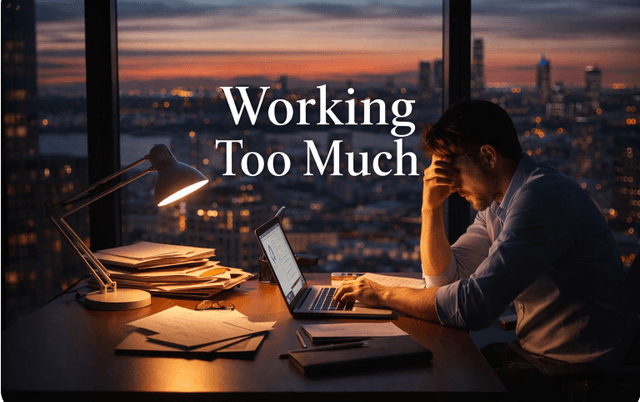
Working Too Much
One of the most common regrets people admit later in life is simple but painful: “I worked too much.” Not because work is bad, but because it slowly replaced everything else that mattered.
Most people do not set out to sacrifice their lives for their jobs. It happens gradually. Longer hours. More responsibility. One more email. One more year of “just pushing through.” Work becomes the priority because it promises security, validation, and progress. Then years pass. Careers eventually end. Titles disappear. Companies move on. What remains are memories - or the absence of them. Many older adults say they wish they had been home more, laughed more, rested more, and been more present with the people they loved.
Why This Regret Happens
Culturally, we reward productivity more than presence. From a young age, many people learn that worth is tied to output. Success becomes something you prove rather than something you experience. Psychologically, work also provides a sense of control. When life feels uncertain, staying busy feels safer than slowing down. But busyness can quietly become avoidance - avoiding relationships, emotions, and even yourself.
What People Say Too Late
People nearing the end of their lives rarely talk about deadlines or accomplishments. They talk about moments they missed:
Dinners they skipped
Conversations they rushed
Children who grew up too fast
Relationships that weakened quietly
The regret is not ambition. It is imbalance.
The Cost of Doing Nothing
Overworking does not just steal time. It erodes health, increases stress, and often leads to burnout and resentment. Relationships suffer first, but eventually motivation and joy disappear too. Ignoring balance today almost guarantees regret tomorrow.
What You Can Do Right Now
Change does not require quitting your job or abandoning ambition. It requires intentional boundaries.
Decide what “enough” looks like for your workday.
Protect at least one part of your day that belongs to your life, not your job.
Practice being fully present when you are with others - no phone, no multitasking.
Schedule rest and relationships the same way you schedule work.
Even small changes compound powerfully over time.
A Reframe That Matters
Work should support your life, not replace it. Success without connection eventually feels empty. Balance is not laziness - it is wisdom. Your future self will not thank you for working harder. They will thank you for working smarter and living fully.
A Question Worth Asking
If you keep living exactly the way you are now, what moments will your future self wish you had protected?
Take the Next Step
Awareness alone is not enough. Real change comes from honest evaluation and intentional growth. This is why SmartGuy exists - to help you evaluate where your time, energy, and priorities are misaligned, eliminate hidden weaknesses, and build a life where you thrive instead of burn out.
At SmartGuy, you will find tools, guided evaluations, and content designed to help you regain clarity, restore balance, and live with purpose. Do not wait until life forces you to slow down. Go to SmartGuy. Evaluate your habits. Reclaim what matters. And build a life you will never regret.
Sign in to share your thoughts