Share this now - someone’s life could change.


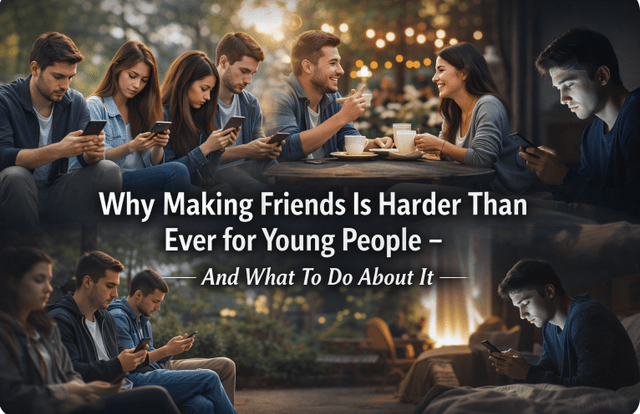
Why Making Friends Is Harder Than Ever for Young People - And What To Do About It
Making friends used to happen naturally. You met people at school, work, church, sports, or in your neighborhood. Conversations started face to face, and friendships grew through shared experiences. Today, many young people feel constantly connected online, yet deeply lonely in real life. Artificial intelligence and social media have quietly changed how relationships form. While technology offers convenience and entertainment, it has also made genuine connection harder to find. Here is why this is happening - and what young people can do about it.
The Illusion of Connection in the Digital Age
Platforms like Instagram and TikTok make it easy to feel socially active without ever having real conversations. You can scroll for hours, watch other people’s lives, and exchange quick messages, yet still feel empty afterward. Likes and views replace eye contact. Short videos replace meaningful dialogue. Over time, this trains the brain to prefer fast digital stimulation instead of slower, deeper relationships. Many young people end up surrounded by content but starved for connection.
How AI Makes Avoiding Real Interaction Easier
AI now suggests replies, curates feeds, and fills every quiet moment with entertainment. While helpful on the surface, this removes the small opportunities where friendships once formed - waiting in line, sitting in silence, or striking up casual conversations. Why risk awkward moments when a screen feels safer? Why face discomfort when distraction is always available? The more AI fills these spaces, the fewer chances people have to practice empathy, vulnerability, and real communication.
Social Comparison Is Damaging Confidence
Social media shows highlight reels, not real life. Everyone appears happier, more attractive, and more successful. Constant comparison quietly erodes self-esteem, making young people afraid of rejection or feeling “not enough.” This often creates a cycle: low confidence leads to isolation, isolation leads to more screen time, and more screen time deepens loneliness.
Why Real Friendships Still Matter More Than Ever
True friendships offer what technology never can: emotional support, honest feedback, shared memories, physical presence, and a genuine sense of belonging. No algorithm can replace laughing together, deep conversations, or someone showing up when life gets hard. Humans are wired for real connection. Without it, mental health suffers and confidence fades.
Practical Ways Young People Can Build Real Friendships Again
You do not need to change everything overnight. Small steps matter.
Put yourself where people are. Join clubs, sports, volunteer groups, church activities, or community events. Friendship requires proximity.
Limit passive scrolling. Use social media to organize real meetups, not replace them.
Practice starting conversations. A simple hello or question can open doors. Most people are just as nervous as you are.
Choose depth over quantity. One meaningful friendship is worth more than hundreds of online followers.
Be the friend you want to have. Listen, show up, and be consistent. Trust grows over time.
Accept awkwardness. Every real connection starts uncomfortable. That is normal. Growth lives on the other side of it.
AI and social media are not going away, but they do not get to control the quality of your life. Friendship still grows the same way it always has - through presence, effort, honesty, and shared experiences. If making friends feels harder today, you are not broken. You are human in a digital world. Step away from the screen. Start one conversation. Show up in real life. The connections you are looking for begin there.
Sign in to share your thoughts