Share this now - someone’s life could change.


The Shroud of Turin: New Evidence, Ancient Truth
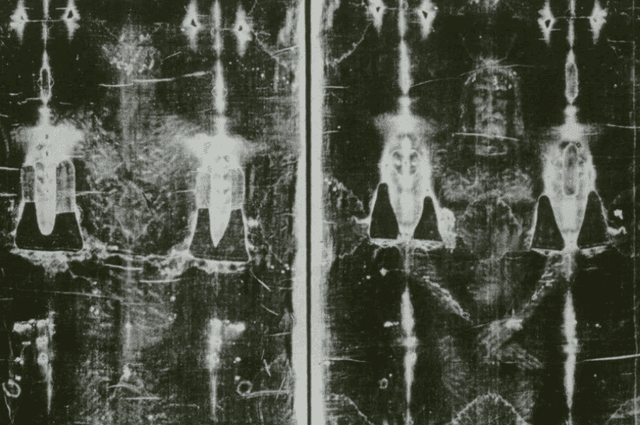
For centuries, the Shroud of Turin has fascinated scientists, historians, and believers. This mysterious linen cloth, bearing the faint image of a crucified man, has been called everything from a medieval forgery to the burial cloth of Jesus Christ Himself. Today, after decades of study and debate, new discoveries are emerging that powerfully support what Christians have long believed: The Shroud is not a hoax. It is a holy relic that testifies to the Passion of Jesus and the reality of His Resurrection.
New Findings That Change Everything
X-Ray Dating Supports a First-Century Origin
In 2022, Italian researchers led by Dr. Liberato De Caro used Wide-Angle X-ray Scattering (WAXS) to study the aging of the Shroud’s flax fibers. Their conclusion? The cloth likely dates to 55–74 CE, right in the timeframe of Jesus’ burial. This result aligns with linen samples from Masada and casts serious doubt on the much-criticized 1988 carbon dating. That earlier test, now known to have sampled a contaminated or repaired section, placed the Shroud in the Middle Ages, an error that the X-ray analysis helps correct.
Bloodstain Analysis Matches the Passion
In 2024, a new study by Professor Giulio Fanti examined the bloodstains on the Shroud using advanced imaging techniques. His findings show:
The blood is consistent with severe trauma - scourging, crucifixion, and a side wound, as described in the Gospels (John 19:34).
The flow patterns indicate the body shifted angles, as would occur during and after crucifixion.
Chemical markers point to heavy polytrauma, confirming unimaginable suffering.
Middle Eastern Flax Origin
Isotope testing in 2024 confirmed that the flax used to make the Shroud likely came from the western Levant - modern Israel, Lebanon, Jordan, or Syria. This fits perfectly with a first-century Jewish burial, not a medieval European forgery.
The Image That Science Can’t Explain
The image on the Shroud remains a mystery:
It is a superficial stain on the outermost fibers - no pigment, no paint, no dyes.
Studies suggest it may have been formed by a burst of energy - ultraviolet radiation beyond anything medieval or even modern science can replicate.
How was this image made? Some researchers propose it was caused by a supernatural event, perhaps even the Resurrection itself.
Other Supporting Evidence
Pollen & DNA: Traces of plants and DNA link the Shroud to the Middle East, North Africa, and Asia, suggesting a long and ancient history of veneration and travel.
Historical Clues: Some historians believe the Shroud is the same as the Edessa Cloth, later kept in Constantinople and possibly stolen during the Fourth Crusade (1204), before resurfacing in France in the 14th century.
A Call to Faith in Troubled Times
In an age of skepticism, the Shroud quietly challenges us:
Could this be the actual cloth that wrapped Jesus in the tomb?
Could this be the physical evidence of a God who suffered and rose for us?
As world tensions rise and faith is questioned, the Shroud speaks across centuries: Christ truly lived. Christ truly suffered. Christ truly rose.
What’s Next?
In 2025, while there is no public exhibition, the Archdiocese of Turin will offer a virtual pilgrimage, allowing millions to explore the Shroud through high-resolution images and educational resources. A major international symposium will follow in St. Louis in August, gathering leading scientists and historians to share their findings.
Final Thought
No relic can replace faith. But the Shroud of Turin may be one of the greatest signs God has left us, a silent, powerful witness to the truth of His Son.
“By His wounds we are healed.” (Isaiah 53:5)
Let the Shroud move your heart to deeper belief, greater love, and renewed hope.
Sign in to share your thoughts