Share this now - someone’s life could change.


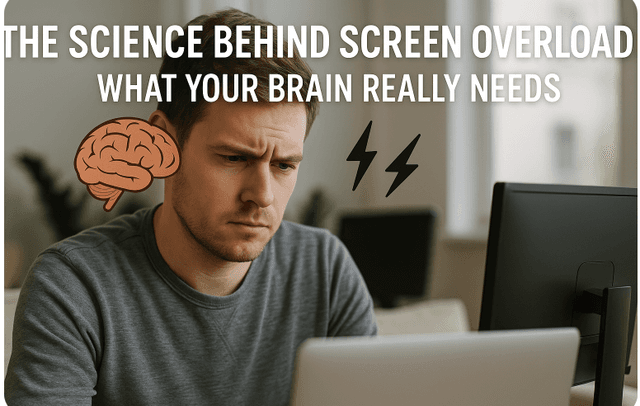
The Science Behind Screen Overload - What Your Brain Really Needs
Most young people spend more time looking at screens than sleeping. Between school, work, social media, streaming, and gaming, the average screen time for Gen Z is over seven hours a day. At first it feels harmless - just entertainment, just staying connected - but your brain is paying a bigger price than you think. Understanding the science of screen overload can help you see why digital minimalism is not just a nice idea but a necessity for mental health, focus, and overall happiness.
What Happens to Your Brain with Too Much Screen Time
Your brain is wired for balance. It thrives when it has moments of stimulation, rest, and recovery. Constant screen use throws this balance off in several ways:
Dopamine Flooding: Every notification, like, or new video triggers dopamine, the brain’s reward chemical. But too much dopamine dulls your sensitivity, making everyday joys feel less exciting.
Shortened Attention Span: Quick scrolling and endless tabs train your brain to expect constant novelty. This makes it harder to focus deeply on studying, reading, or even holding conversations.
Sleep Disruption: Blue light from screens interferes with melatonin, the hormone that helps you fall asleep. Late-night scrolling leaves you feeling drained the next day.
Stress Overload: Consuming bad news, online drama, or constant comparison keeps your brain in fight-or-flight mode, raising anxiety levels.
Your brain is like a muscle. When you constantly push it with digital input and never let it rest, it gets fatigued, scattered, and less effective.
What Your Brain Really Needs
The good news is that the brain is adaptable. With the right habits, you can reset your mind and restore balance. Here is what your brain craves:
Deep Focus Time: Working on one thing at a time strengthens your ability to concentrate. Try setting aside 25 minutes for single-task focus before taking a short break.
Face-to-Face Interaction: Real conversations release oxytocin, the bonding hormone. This lowers stress and builds resilience.
Rest and Silence: Just as muscles need recovery after exercise, your brain needs quiet moments. Daydreaming, prayer, or meditation allow your mind to recharge.
Quality Sleep: Seven to nine hours of screen-free rest helps your brain consolidate memories and reset for the next day.
Nature Exposure: Time outdoors lowers cortisol, improves mood, and restores focus. Even 20 minutes outside can reset your mental state.
Steps to Reduce Screen Overload
Set Screen-Free Zones: Keep your phone out of your bedroom or away from your study area.
Take Micro Breaks: Every hour, step away from screens for a few minutes. Stretch, walk, or drink water.
Limit Multitasking: Instead of five tabs and two apps open at once, focus on one task. Your brain will perform better.
Turn Off Non-Essential Notifications: Reduce the constant dopamine hits that keep you hooked.
Replace Screen Time with Life Time: Pick up a hobby that does not involve a device - sports, music, art, or volunteering.
Why Digital Minimalism Works
Digital minimalism aligns technology with what your brain actually needs. Instead of overwhelming your mind, it supports clarity, creativity, and calm. You will notice that when you cut down on screen time, you feel less stressed, sleep better, and enjoy life more fully. The key is not to throw away your devices but to use them with intention. Your brain is your most powerful tool. Treat it well, and it will reward you with sharper focus, deeper joy, and stronger resilience.
Give Your Brain What It Deserves
You only get one brain, and it is designed for more than endless scrolling. By practicing digital minimalism, you free your mind from overload and unlock your full potential.
For short, positive content that inspires without overwhelming, visit SmartGuy.com. Instead of draining your brain, you will discover practical tips, encouragement, and tools to live smarter and stronger. Digital minimalism is not about restriction - it is about restoration. And your brain will thank you for it.
Sign in to share your thoughts