Share this now - someone’s life could change.


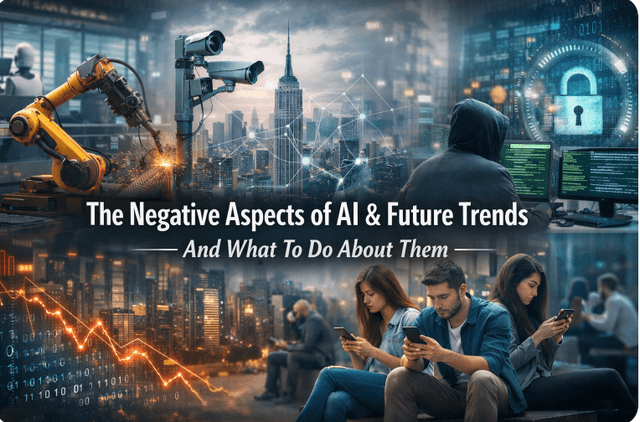
The Negative Aspects of AI, the Future Trends It Will Bring - And What To Do About Them
Artificial intelligence is moving fast. It is reshaping how we work, communicate, shop, learn, and even how decisions get made. While AI promises efficiency and convenience, it also brings serious challenges that individuals, families, and businesses must face head-on. The future will reward those who prepare, and punish those who ignore the risks. Here is what is coming - and what you can do now.
Job Displacement and Economic Instability
AI is already replacing routine tasks in customer service, accounting, logistics, marketing, and manufacturing. As automation expands, many traditional roles will shrink or disappear. Entire industries will be forced to adapt quickly, creating financial pressure for workers and small businesses alike. What to do about it - Focus on skills that machines struggle with: creativity, leadership, emotional intelligence, problem-solving, and relationship building. Diversify income where possible. For business owners, lean into trust, referrals, and human connection rather than relying only on ads or algorithms.
Increased Surveillance and Loss of Privacy
The future will include more connected devices, smarter cameras, predictive systems, and constant data collection. Together, these technologies can build detailed profiles of people’s habits, movements, and preferences. Convenience slowly turns into surveillance when everything is tracked. What to do about it - Be intentional with technology. Limit unnecessary smart devices. Review privacy settings regularly. Avoid oversharing online. Support companies that value transparency and data protection.
More Noise, Less Trust
AI makes it easy to generate fake content, fake reviews, fake images, and even fake voices. As this increases, it becomes harder for people to know what is real. Trust online will erode, and consumers will struggle to identify credible businesses and information. What to do about it - Build real-world reputation. Collect genuine reviews. Strengthen personal networks. In business, focus on long-term relationships and referrals, not shortcuts. In life, verify sources and think critically before reacting or sharing.
Mental Health and Human Disconnection
Automation and digital convenience can quietly replace real interaction. Many people already feel isolated despite being constantly connected. AI-driven feeds often prioritize engagement over wellbeing, increasing anxiety, comparison, and distraction. What to do about it - Protect human connection. Schedule device-free time. Prioritize face-to-face conversations. Exercise, pray or meditate, and spend time outdoors. Teach children empathy, patience, and communication - skills no machine can replace.
Decision-Making Shifted Away From Humans
As AI becomes embedded in healthcare, finance, hiring, education, and law, more decisions will be influenced or made by systems optimized for efficiency and profit. This risks sidelining compassion, morality, and context. What to do about it - Stay informed. Question automated outcomes. Advocate for human oversight. Support policies and platforms that keep people in the loop for important decisions.
AI is not just a tool - it is a force reshaping society. It will amplify both the best and worst of human behavior. Those who drift will be carried by it. Those who prepare will shape their future. Invest in relationships. Build adaptable skills. Protect your privacy. Strengthen your community. Stay grounded in values. Technology will keep advancing. The real question is whether we do too.
Sign in to share your thoughts