Share this now - someone’s life could change.


Substance Abuse or Addiction
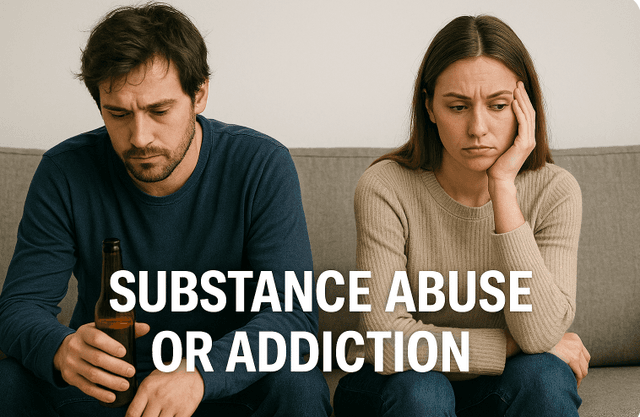
Substance abuse or addiction is one of the most challenging issues a couple can face. Addiction impacts not only the individual struggling with it but also the partner, leading to trust issues, financial problems, emotional distance, and even physical or verbal conflict. According to Dr. Robert Weiss, a therapist specializing in addiction and relationships, “Addiction is a disease of isolation, and in a relationship, it creates emotional disconnection and betrayal.”
WATCH THE VIDEO
When couples seek therapy for issues related to addiction, one of the primary goals is to help both partners understand that addiction is a medical condition, not a moral failing. Dr. Nora Volkow, director of the National Institute on Drug Abuse (NIDA), explains, “Addiction changes the brain in fundamental ways, affecting decision-making, self-control, and the ability to experience pleasure. It is essential for couples to recognize this as they work toward recovery.”
In therapy, couples are encouraged to develop open and honest communication about the addiction. Often, the non-addicted partner has built up resentment, anger, or frustration, feeling that their trust has been repeatedly violated. Addiction therapist Dr. Claudia Black advises that the non-addicted partner should “focus on expressing their feelings in a non-accusatory way, using ‘I’ statements rather than ‘you’ statements, to avoid escalating the conversation.” For example, instead of saying, “You’re ruining our lives with your drinking,” they might say, “I feel scared and hurt when I see you drink because I worry about our future.”
Therapists also help the addicted partner acknowledge the impact their behavior has had on the relationship while encouraging them to seek treatment. Substance abuse treatment may include detox programs, 12-step support groups like Alcoholics Anonymous (AA) or Narcotics Anonymous (NA), or individualized therapy. Both partners must understand that recovery is a long-term process that requires patience and support.
Another essential aspect of therapy is establishing healthy boundaries. The non-addicted partner often struggles with enabling behaviors—trying to control or manage the addict’s substance use to keep the peace. Dr. Weiss emphasizes that “setting clear boundaries, like not tolerating substance use in the home or refusing to cover up for the addict’s behaviors, is critical for both partners’ well-being.”
With professional help, couples can rebuild trust, support the recovery process, and restore emotional intimacy. However, both partners must be fully committed to the journey of healing, which often requires not only individual treatment for the addicted partner but also couples therapy to address the relationship's underlying issues.
Sign in to share your thoughts