Share this now - someone’s life could change.


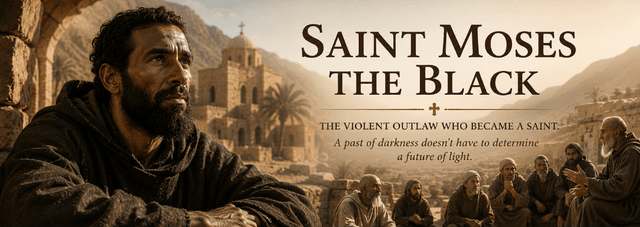
Saint Moses the Black: The Violent Outlaw Who Became a Saint
Saint Moses the Black has one of the most dramatic conversion stories in Christian history. Before he became a monk known for humility, forgiveness, wisdom, and peace, Moses was reportedly a thief, a violent criminal, and the leader of a band of robbers. He was feared rather than admired. If you had met him during the early part of his life, "future saint" might have been the last description you would have chosen. Yet his story became extraordinary because Moses proves that a terrible past does not have to determine the rest of your life.
A Man Feared by Others
Moses lived during the fourth century, probably in Egypt. Much of what we know about him comes from early Christian monastic traditions rather than modern historical records, so some details vary. Ancient accounts describe Moses as physically powerful and intimidating. He was enslaved to a government official but was reportedly dismissed because of theft and violent behavior. Afterward, his life became even darker.
From Servant to Outlaw
Moses joined criminals and eventually became the leader of a group of robbers. Stories portray him as someone people genuinely feared. He stole, fought, and was willing to use violence. This wasn't a man who simply made a few youthful mistakes. Moses had built an identity around a way of life completely opposed to the person he would eventually become.
The Robber Who Went Looking for Revenge
One famous story tells of Moses becoming furious with a shepherd whose dogs prevented him from committing a robbery. Determined to retaliate, Moses reportedly crossed the Nile under dangerous conditions with weapons in his mouth or on his head, intending to attack the man. The shepherd escaped, so Moses slaughtered some of his sheep instead. The story gives us a picture of just how consumed by anger and violence Moses had become.
Then Everything Began to Change
At some point, Moses found his way to a community of monks in the Egyptian desert, possibly while fleeing authorities. What he encountered there was completely different from the world he knew. These men weren't competing for money, power, possessions, or reputation. They lived simply, prayed, worked, fasted, practiced discipline, and sought God in silence.
The Criminal Stayed With the Monks
Something about their way of life affected Moses deeply. Instead of returning to his old life, he stayed. Eventually, he became a monk himself. The feared robber entered a world built around prayer, humility, obedience, self-control, and peace. But becoming a monk didn't magically erase everything inside him.
Conversion Was Only the Beginning
Moses had spent years developing habits of anger, violence, and impulsiveness. Putting on the clothing of a monk didn't instantly remove them. He still had to struggle against the person he had trained himself to become. This may be one of the most important parts of his story. Deciding to change can happen in a moment. Actually changing can take years.
The Robbers Who Picked the Wrong Monk
One of the most memorable stories about Moses occurred when robbers entered his monastic cell, apparently unaware of who he was. The former outlaw easily overpowered them. But instead of beating or killing them, Moses reportedly tied them up, carried or brought them to the other monks, and asked what should be done with them.
Imagine Their Surprise
According to the tradition, when the robbers discovered that the monk who had captured them was Moses, the notorious former bandit, they were astonished. His transformation affected them so deeply that some versions of the story say they repented and became monks themselves. The man who once inspired people to commit crimes was now inspiring criminals to leave crime behind.
The Greatest Battle Was Inside Himself
Moses had known how to defeat men physically. Now he had to learn how to defeat anger, pride, temptation, and resentment within himself. The desert became his new battlefield. Instead of fighting enemies with weapons, he fought the parts of himself that had once controlled his life.
A Lesson in Humility
One famous story says that the monks gathered to judge a brother who had committed a fault. Moses initially refused to attend. When he was eventually persuaded to come, he arrived carrying a leaking basket or sack filled with sand on his back. As he walked, the sand poured out behind him.
My Own Sins Are Falling Behind Me
When the monks asked what he was doing, Moses explained that his own sins were spilling out behind him where he couldn't see them, yet he had come to judge the sins of another person. The message was unmistakable. Before condemning someone else's failures, look honestly at your own.
The Former Criminal Became Known for Mercy
That lesson carried special weight coming from Moses. He knew what serious wrongdoing looked like because he had lived it. Yet rather than making him harsher toward other sinners, remembering his past helped make him compassionate. Moses understood that if he could change, perhaps the person standing before him could change too.
The Struggle With Temptation
Early monastic writings also describe Moses struggling intensely with temptation even after entering religious life. He sought advice from experienced spiritual fathers and practiced prayer, fasting, work, and vigilance. His struggles reportedly continued for years. Moses didn't become holy because temptation disappeared. He became holy because he kept fighting against it.
Carrying Water in the Darkness
One tradition tells that Moses would secretly rise at night, collect water, and fill the containers of older monks who lived too far from the well to easily obtain it themselves. Think about the transformation. The man who once went out at night to steal from people was now going out at night to quietly serve them.
Nobody Needed to Know
There was no audience applauding him. Moses wasn't building a reputation through these acts. He was learning to replace selfishness with service. The hands that had once taken from others were now giving to them.
The Strong Man Learns Gentleness
Moses remained physically imposing, but the strength that eventually defined him was different. He became known for patience, hospitality, wisdom, and humility. Younger monks began coming to him for spiritual guidance. The man who had once led criminals eventually became a spiritual father.
From Outlaw to Priest
Moses eventually became a priest and an important figure among the Desert Fathers, the early Christian monks whose teachings profoundly influenced Christian spirituality. His wisdom was remembered and passed down through generations of monastic tradition.
His Past Wasn't Erased
One of the most powerful aspects of Moses's story is that Christianity didn't require everyone to pretend his earlier life never happened. His past became part of his witness. People could look at the gentle monk and remember the violent man he had once been. The contrast itself demonstrated the possibility of conversion.
His Final Test
According to tradition, when Moses was an older man, he learned that raiders were approaching the monastery. Some monks wanted to defend themselves or flee. Moses refused to return to violence. He reportedly encouraged those who wanted to escape to do so, but he remained behind with several brothers.
The Man Who Once Lived by Violence Chose Peace
Moses and several monks were killed by the attackers, probably around the year 405. The man who had once used violence against others ultimately refused to save himself through violence. His life had come full circle.
Why Saint Moses Matters Today
Many people believe they're permanently defined by something they've done. Maybe it was a terrible decision. An addiction. A betrayal. Years of anger. A broken relationship. A criminal past. A period when they hurt people they loved. They may quietly think, "If people really knew what I've done, they would never see me the same way."
Moses Would Understand
Moses couldn't pretend he had always been a good man. He couldn't erase the people he had frightened or harmed. He couldn't go backward and create a cleaner history. But he could decide what kind of man he would become from that moment forward. And that is exactly what he did.
You Are More Than Your Worst Decision
The world often labels people permanently. Criminal. Failure. Addict. Liar. Angry. Difficult. Lost. Moses's life challenges the idea that the worst thing a person has done must become the final definition of who that person is. Christianity offers something radically different: repentance, forgiveness, transformation, and the possibility of beginning again.
Real Change Requires More Than Regret
Moses didn't simply feel sorry for his past. He changed his behavior. The thief began giving. The violent man became peaceful. The proud man practiced humility. The leader of criminals became a leader of monks. The man who once frightened others became someone people approached for wisdom. Repentance wasn't merely something Moses said. It became the direction of his life.
What Saint Moses Can Teach Us
Stop using your past as an excuse to remain the person you no longer want to be. Admit what you've done wrong. Ask God for forgiveness. Make amends where possible. Replace destructive habits with better ones. Serve people instead of using them. Be patient with your transformation. And when you see someone else struggling, remember that you're looking at a person whose story isn't finished yet.
Saint Moses the Black may have once seemed like one of the least likely people in Egypt to become a saint. Yet that is precisely why his life remains so powerful more than 1,600 years later. If a violent outlaw could become a man remembered for humility, mercy, wisdom, and peace, then none of us should assume we're beyond the possibility of change. You may not be able to rewrite the beginning of your story. But with God's grace, you can still change how the next chapter is written.
Sign in to share your thoughts