Share this now - someone’s life could change.


From Argentina to Rome: The Humble Beginnings of a Shepherd
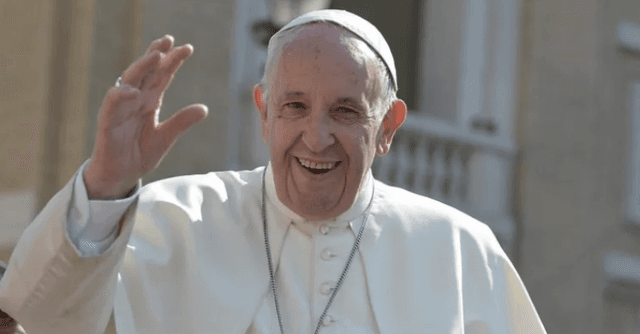
Born Jorge Mario Bergoglio on December 17, 1936, in Buenos Aires, Argentina, he was the son of Italian immigrants and worked as a janitor and chemical technician before joining the Society of Jesus. Ordained a Jesuit priest in 1969, his life was defined by a deep love for the poor, a simplicity of lifestyle, and a heart for those on the margins.
When he was elected pope on March 13, 2013, he became:
The first Jesuit pope
The first pope from the Americas
And the first non-European pope in over 1,200 years
He chose the name Francis, inspired by St. Francis of Assisi, a man of poverty, peace, and care for creation. And that name became his mission.
A Papacy Marked by Mercy, Reform, and Global Outreach
Throughout his 12-year pontificate, Pope Francis made it his mission to bring the Church to the peripheries—to the suffering, the voiceless, and the forgotten. He consistently reminded the world that the Gospel is not only proclaimed in cathedrals, but lived on the streets.
Here are just a few of the major marks of his legacy:
He reawakened the Church’s call to mercy. His Jubilee Year of Mercy invited Catholics everywhere to rediscover the healing power of Confession, compassion, and forgiveness.
He elevated care for the environment. His encyclical Laudato Si’ called the world to stewardship and responsibility, linking creation care with love for the poor.
He championed the dignity of the marginalized. From refugees and prisoners to the elderly and unborn, Francis constantly reminded us that every person has God-given worth.
He sought to reform and renew the Church. Calling for synodality, accountability, and pastoral closeness, he strove to shape a Church that listens and accompanies, without compromising truth.
He lived simply. Declining the Apostolic Palace, he lived in the humble Casa Santa Marta, took his meals in common, and was often seen embracing the sick, the disabled, and children with tenderness.
A Time of Transition: What’s Next for the Catholic Church?
With the death of Pope Francis, the Church now enters a period known as sede vacante—the "vacant seat." Over the coming weeks, cardinals from around the world will gather in a conclave to elect a new pope.
What comes next is not just a moment of transition—it’s a time of discernment, prayer, and hope. The Church stands at a crossroads, and the next pope will carry the responsibility of continuing the work of evangelization, healing division, and defending the truth in a rapidly changing world.
But even in the uncertainty, we are not alone.
Christ promised: “I am with you always, even to the end of the age.” —Matthew 28:20
The Holy Spirit still guides the Barque of Peter.
Final Reflections: The Legacy of Pope Francis
Pope Francis reminded us that God’s mercy is stronger than our sin, that the Church is not a fortress but a field hospital, and that holiness is found not only in doctrine, but in how we love the least among us.
His passing on Easter Monday is itself a message:
The shepherd who preached Christ’s Resurrection has now gone to meet the Risen Lord.
And so, we pray:
Eternal rest grant unto him, O Lord,
and let perpetual light shine upon him.
May his soul, and the souls of all the faithful departed,
through the mercy of God, rest in peace. Amen.
Let us now lift up the Church in prayer—grateful for the life of Pope Francis, and hopeful for the new chapter the Holy Spirit is preparing to write.
We are not without a shepherd.
The Good Shepherd is still leading His Church.
And because Christ is risen…
There is always hope.
Sign in to share your thoughts