Share this now - someone’s life could change.


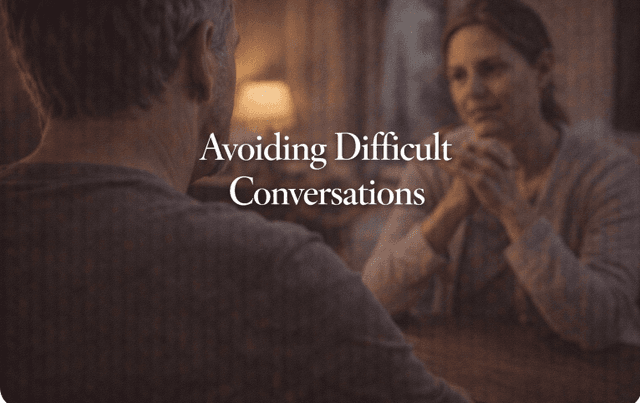
Avoiding Difficult Conversations
One of the most common regrets people admit later in life is avoiding difficult conversations they knew they needed to have. They delayed honesty to avoid discomfort, conflict, or emotional pain. Looking back, many say, “I wish I had said something when I still could.” Difficult conversations are uncomfortable by nature. They involve vulnerability, uncertainty, and the risk of emotional fallout. But avoiding them rarely protects relationships. More often, it slowly erodes them. Silence feels safe in the moment. Regret grows quietly over time.
Why This Regret Happens
Humans are wired to avoid discomfort. The brain treats conflict as a threat and pushes us toward short-term relief instead of long-term resolution. As a result, people postpone conversations about boundaries, feelings, expectations, or unresolved issues. Many also fear saying the wrong thing or hurting someone they care about. Ironically, avoiding honesty often causes more harm than speaking up would have. People later realize they were trying to protect peace - but peace built on silence never lasts.
What People Realize Too Late
Later in life, people often regret the conversations they avoided more than the ones that went badly. They regret not expressing how they felt, not setting boundaries sooner, or not addressing problems while there was still time to change them. They realize honesty might have been uncomfortable, but silence became permanent. The regret is not conflict. It is missed opportunity.
The Cost of Doing Nothing
Avoiding difficult conversations allows problems to grow. Misunderstandings deepen. Resentment builds. Relationships become strained or distant.
In some cases, people lose relationships entirely - not because the conversation happened, but because it never did. Over time, people also lose confidence in their ability to communicate honestly, reinforcing the pattern.
What You Can Do Right Now
Courage does not require perfection. It requires clarity.
Identify one conversation you have been avoiding.
Get clear on what you feel and what you need before speaking.
Choose honesty with compassion, not accusation.
Focus on understanding, not winning.
Accept discomfort as part of growth.
Difficult conversations are easier than living with unspoken regret.
A Reframe That Changes Everything
Honest conversations are acts of respect - for yourself and others. Silence may feel kind, but clarity is kinder in the long run.
Your future self will not wish you had stayed quiet. They will wish you had trusted yourself to speak.
A Question Worth Reflecting On
What conversation are you postponing that your future self wishes you would have already had?
Take the Next Step
Learning to navigate difficult conversations starts with self-awareness and intentional communication skills. This is exactly why SmartGuy exists - to help you identify communication gaps, eliminate avoidance patterns, and build the confidence to speak honestly and clearly.
At SmartGuy, you will find evaluations, guidance, and content designed to help you strengthen relationships, resolve tension, and live without unspoken regret. Do not let silence decide your future. Go to SmartGuy. Evaluate what you are avoiding. Eliminate fear-driven silence. And start communicating with courage and clarity - starting now.
Sign in to share your thoughts